When we think about glass in our homes, we often think about its beauty and transparency. But when glass is used in applications like shower doors, stair railings, or large tabletops, its strength and safety become the most important considerations. Standard glass, also known as annealed glass, can be dangerous when it breaks, shattering into large, jagged shards. This is why building codes mandate the use of safety glass in any application where there is a risk of human impact. The two most common types of safety glass are tempered glass and laminated glass. Understanding the difference between these two products is key to ensuring your custom glass project is not only beautiful but also safe and code-compliant.
Tempered Glass: Strength Through Thermal Treatment
Tempered glass is the most common type of safety glass used in residential applications like shower enclosures and tabletops. It is a single sheet of glass that has been put through a special heat-treating process.
- How it’s Made: A standard piece of annealed glass is heated in a furnace to an extremely high temperature (over 1,000°F) and then rapidly cooled with high-pressure air jets. This process, called “quenching,” causes the outer surfaces of the glass to cool much faster than the center. This creates a state of high compression in the outer surfaces and high tension in the center of the glass.
- Its Safety Feature: This internal stress makes tempered glass about four to five times stronger than standard annealed glass of the same thickness. Its most important safety feature, however, is how it breaks. When tempered glass does break, it shatters into thousands of small, pebble-like, relatively harmless pieces instead of dangerous, sharp shards. This dramatically reduces the risk of serious injury. You have seen this effect if you have ever seen a shattered car side window.
As the National Glass Association and other industry groups emphasize, any glass used in doors, shower enclosures, or railings must be properly tempered and certified to meet safety standards.
Laminated Glass: Safety Through a Sandwich
Laminated glass offers a different kind of safety. Instead of being heat-treated, it is made by bonding two or more layers of standard glass together with a durable, flexible interlayer, typically made of polyvinyl butyral (PVB). It’s essentially a glass sandwich.
- How it’s Made: The interlayer is placed between two sheets of glass, and the sandwich is then put into an autoclave where it is subjected to high heat and pressure, which permanently bonds the glass and the interlayer together.
- Its Safety Feature: The primary safety feature of laminated glass is its ability to hold together when broken. If the glass is struck with enough force to break, the interlayer will hold the broken pieces of glass in place, preventing them from scattering. The glass will crack in a spiderweb pattern, but it will remain a single, intact piece. This is the same type of glass used for car windshields.
- Other Benefits: The plastic interlayer also gives laminated glass other beneficial properties. It is very effective at blocking UV radiation, which can protect your furniture and flooring from fading. It also has excellent sound-dampening qualities, making it a great choice for reducing noise transmission.
Choosing the Right Safety Glass for Your Project
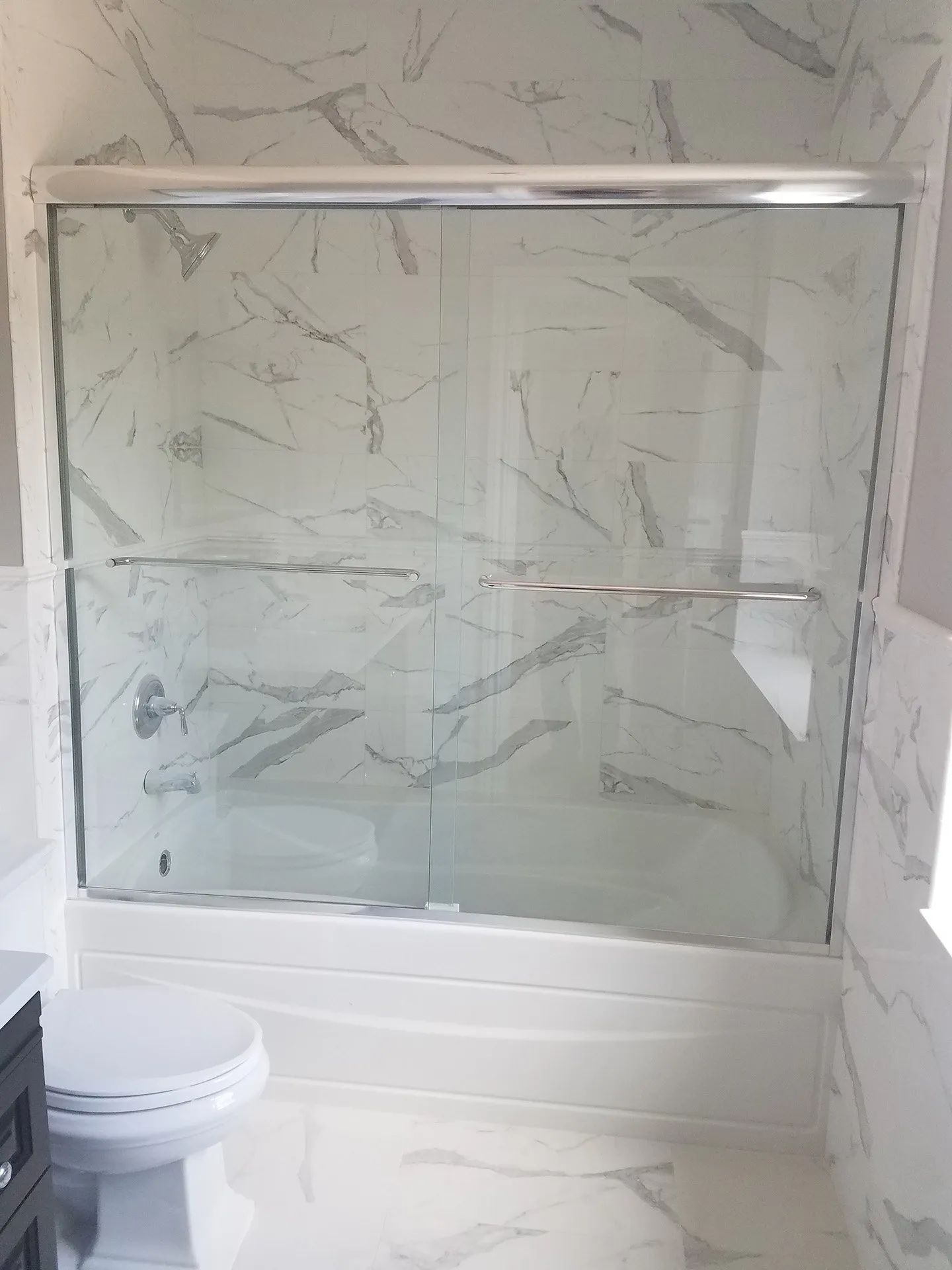
For most residential applications like shower doors, glass tabletops, and shelving, tempered glass is the standard and most cost-effective choice. Laminated glass is typically used in applications where it’s critical that the opening remains sealed even after the glass is broken, such as in storefronts, skylights, or some high-end stair railings.
Your New Jersey Custom Glass Experts
When you are investing in a beautiful custom glass project for your home, ensuring it is safe and code-compliant is paramount. A professional glass company will ensure that the correct type of safety glass is used for every application. For homeowners in New Jersey, the team at Michael Angelo’s Custom Mirrors and Shower Enclosures has a deep understanding of all types of custom glass. Contact us today for a consultation.